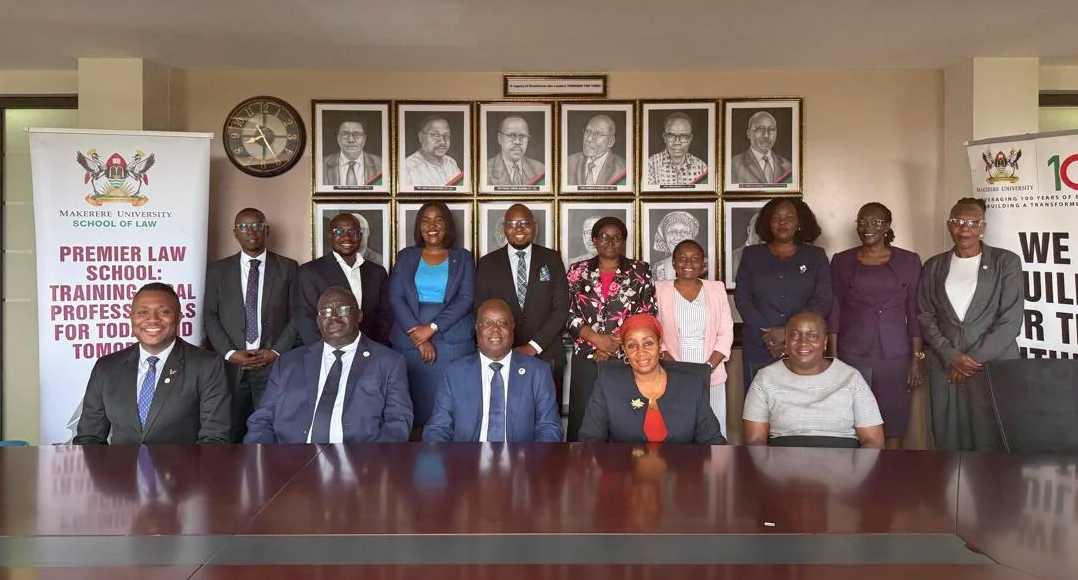
SoL and Judicial Service Commission Explore Areas of Collaboration
Makerere University School of Law (SoL) on 9th November 2026 hosted a delegation from the Judicial Service Commission (JSC), led by its Chairperson, Hon. Justice Dr. Singiza Douglas Karekona, to explore potential areas of collaboration aimed at strengthening legal education, judicial practice and the administration of justice. The meeting brought together the School’s leadership and academic staff alongside representatives of the Commission to discuss opportunities for joint programming in research, professional development, student mentorship and public legal education.

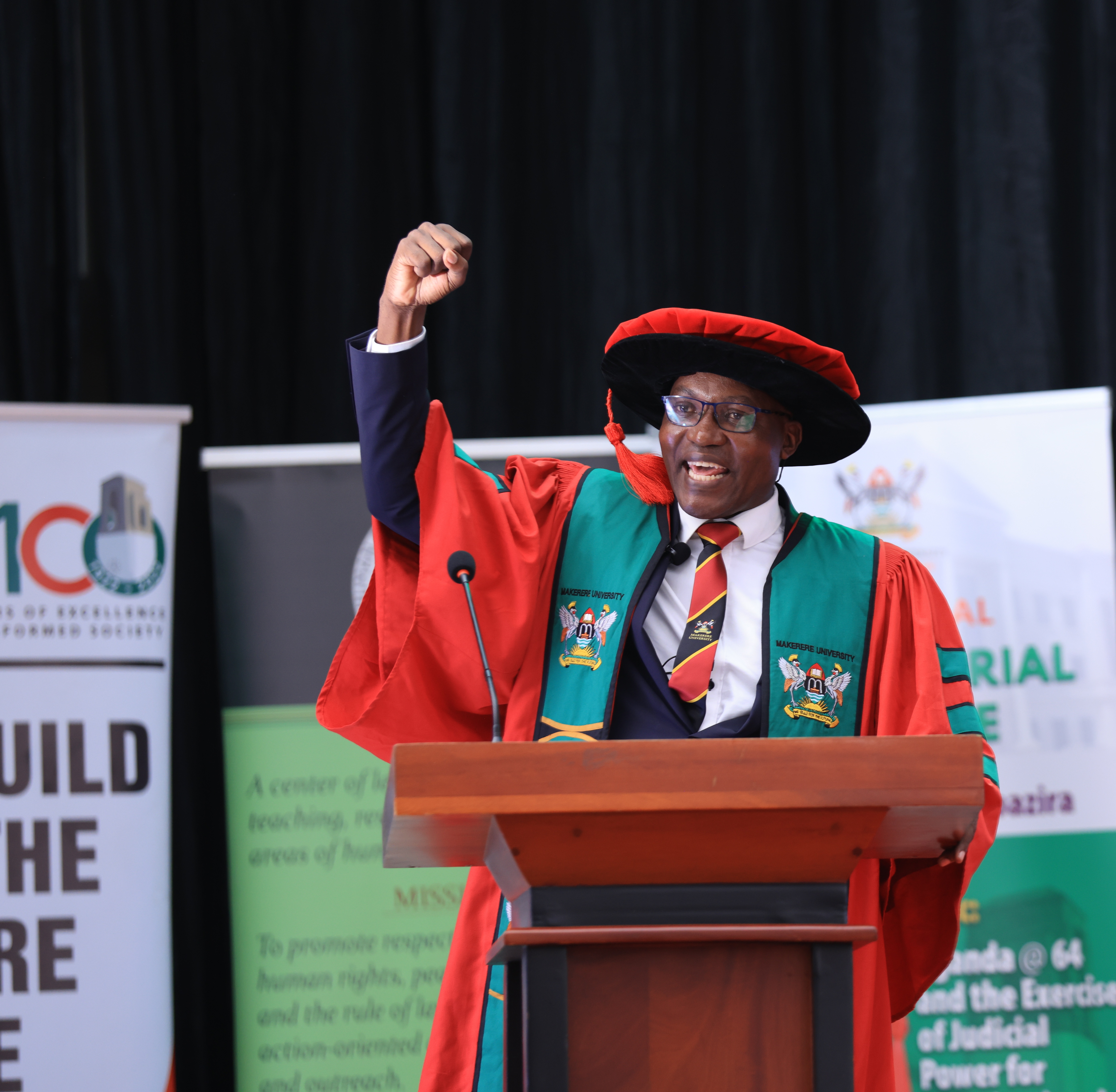
Welcoming the delegation, Dr. Zahara Nampewo, Ag. Dean of SoL, reaffirmed the School’s commitment to strengthening its engagement with the Commission, noting that the two institutions share a common mission of developing a competent, ethical and service-oriented legal profession that advances justice and national development. She emphasised the importance of strengthening the linkages between legal education and judicial practice, particularly in light of emerging legal and technological developments such as artificial intelligence, cybercrime and assisted reproductive technologies. She observed that these developments call for continuous updating of legal knowledge and professional skills, making collaboration between academic institutions and the Judiciary essential in bridging the gap between theory and practice.
Dr. Zahara Nampewo
Dr. Nampewo further proposed structured student placement and mentorship programmes within the Commission, joint research to inform policy development, guest lectures and participation in judicial dialogues and professional development programmes. She also invited the Commission to contribute to the School’s ongoing curriculum review under the competency-based education and training approach by providing guidance on the emerging competencies required of graduates entering the justice sector. In addition, she highlighted opportunities for collaboration in promoting access to justice through public interest legal clinics, legal aid and community outreach initiatives.
Prof. Christopher Mbazira, Coordinator of the Public Interest Law Clinic (PILAC) at SoL, underscored the importance of closer collaboration between legal education institutions and the Judiciary in preparing competent and ethical legal professionals. He highlighted opportunities for structured student placements and mentorship, collaborative research, guest lectures and faculty participation in judicial dialogues and professional development programmes. He noted that such engagements would enrich practical legal training, strengthen ethical values among students and contribute to building public confidence in the justice system.
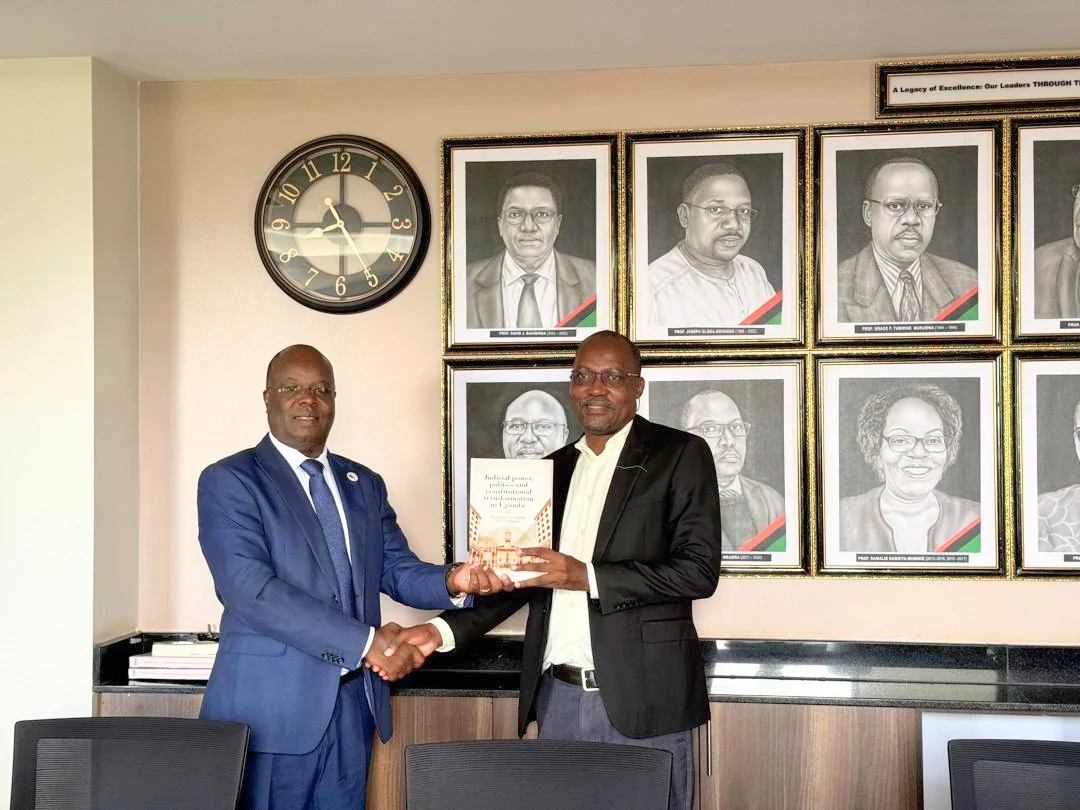
On opportunities for community engagement, Dr. Patricia Atim P’Odong highlighted the potential for SoL students to support the Commission’s public legal education and outreach programmes through the development of educational materials and participation in community engagements and public Barazas. She noted that such opportunities would provide students with valuable practical experience while extending the reach of the Commission’s public education initiatives. She also shared the School’s experience in advancing access to justice through initiatives that include training judicial officers, police officers and prosecutors on juvenile justice and alternative sentencing mechanisms. Other interventions include supporting the reintegration of juvenile offenders, providing legal assistance to incarcerated women and strengthening the capacity of Local Council leaders in the administration of local council courts.
Dr. Diana Ahumuza proposed the engagement of eminent legal practitioners and judicial officers in teaching, supervision and student mentorship. She observed that the University’s provisions for honorary appointments could provide a framework for bringing experienced practitioners into the classroom, particularly as the School advances competency-based legal education and practical training. She also pointed to previous successful research and training engagements with the Judicial Training Institute, including research that informed the training of judicial officers in electoral dispute management, as evidence of the potential for deeper institutional collaboration.
Dr. Daniel Ruhweza highlighted the possibility of strengthening the School’s moot court programme through engagement with the Commission. He expressed interest in receiving guidance on the formal recognition and gazetting of the School’s moot court, noting that this would further enhance students’ practical legal training and exposure to court processes.
In his remarks, Hon. Justice Dr. Singiza welcomed the proposed areas of collaboration and emphasised the importance of mentorship and identifying and nurturing young legal talent for future leadership in the justice sector. Drawing on experiences from other jurisdictions, he highlighted the value of structured mentorship programmes in preparing promising young professionals for judicial careers. He expressed optimism that the engagement would enable the two institutions to identify distinct areas of mutual interest and develop joint programmes.
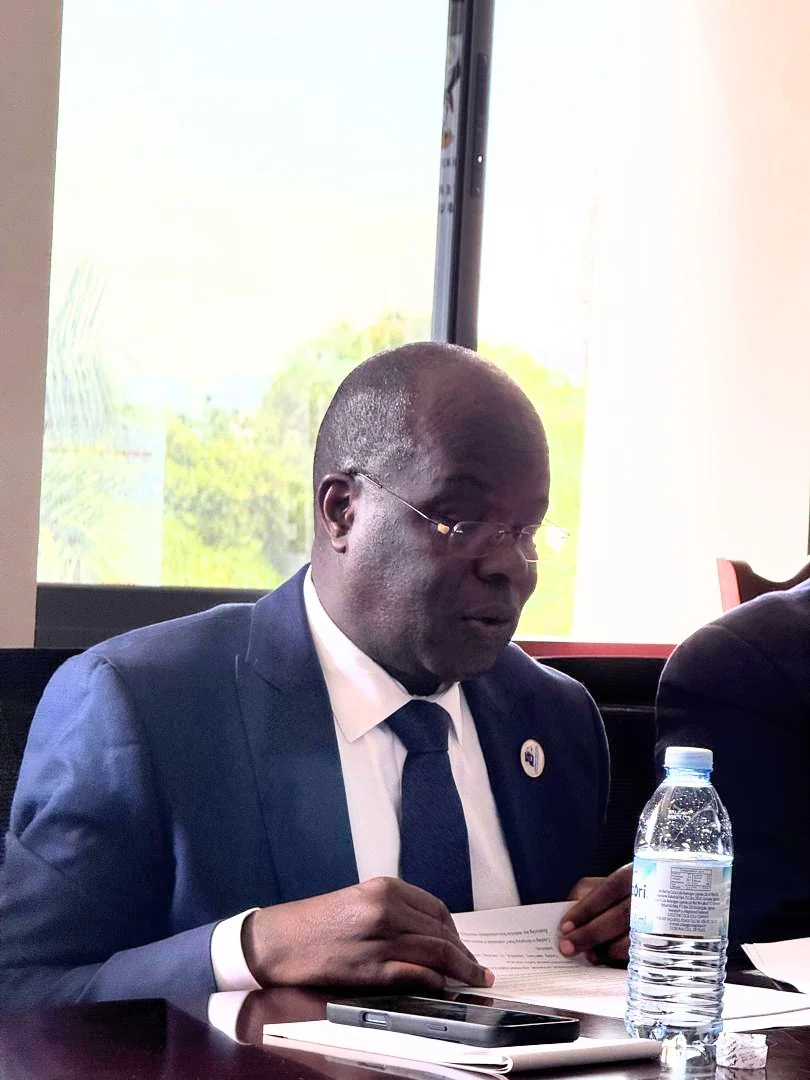
The Commission’s delegation also identified opportunities for collaborative research on issues affecting the administration of justice. They highlighted ongoing research examining the use of law clerks and research assistants in the Judiciary, as well as the practice of appointing acting judges in different jurisdictions. He also underscored the importance of law reporting as a tool for assessing the quality of judicial decisions and strengthening the development of legal precedent, calling for collaboration with the School in advancing research in these areas.
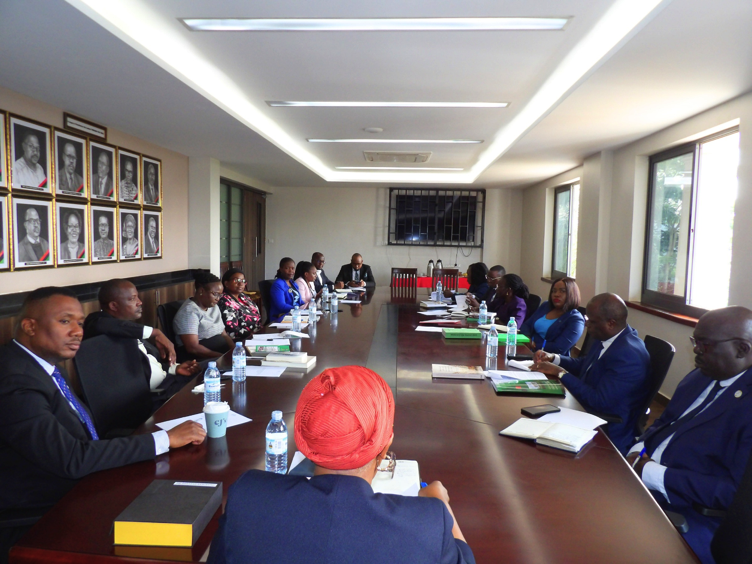
The engagement reaffirmed the shared commitment of Makerere University School of Law and the Judicial Service Commission to strengthening legal education, enhancing judicial capacity, nurturing ethical legal professionals and promoting access to justice. Both institutions expressed interest in identifying priority areas and establishing a framework for sustained collaboration.