University Symposium at MakSoL Calls for Action to Advance Transitional Justice in Uganda
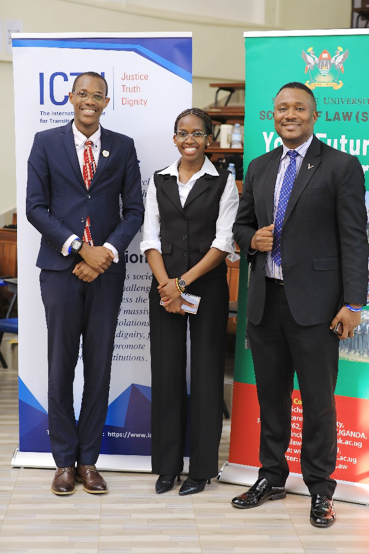
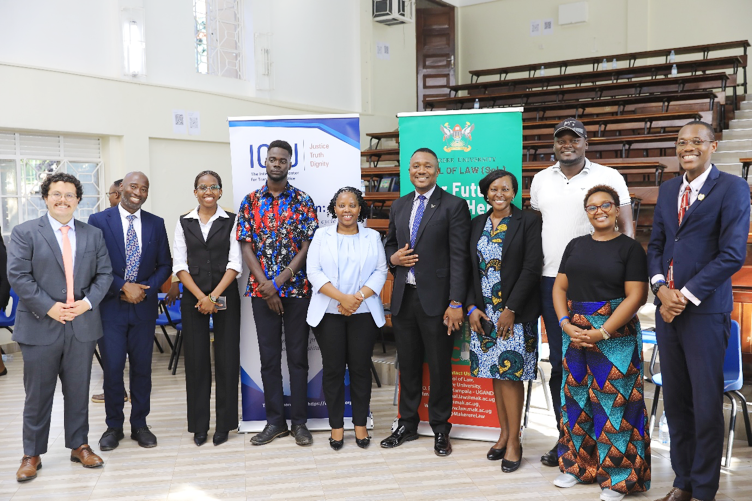
On 27th August 2026, Makerere University School of Law (MakSoL) in partnership with the International Center for Transitional Justice (ICTJ) supported by the Ministry of Foreign Affairs of the Kingdom of the Netherlands, held a university symposium calling for renewed efforts to translate Uganda’s transitional justice commitments into tangible justice for communities affected by conflict and human rights violations.
Themed “Confronting the Past and Building for the Future,” the symposium brought together students, academics, policymakers, practitioners, survivors, advocates and other stakeholders to reflect on Uganda’s transitional justice journey and explore pathways towards sustainable peace, justice and accountability.
Discussions focused on Uganda’s transitional justice experience, accountability for international crimes, survivor-centred justice, the role of cultural and religious leaders in peacebuilding, and lessons from transitional justice processes in other countries. The symposium also provided a platform for young people to examine their role in shaping a more peaceful, inclusive and accountable future.
Addressing participants, Ms. Violet Atukunda, Vice President of the Makerere Law Society (MLS), described transitional justice as a deeply human issue that challenges societies to consider how victims can be heard and supported, accountability achieved, and justice contribute to healing, reconciliation and lasting peace.
She welcomed practitioners, policymakers, academics, survivors, advocates and young people to share experiences, challenge conventional thinking and reflect on their responsibility to shape a more just and peaceful future.
Representing Professor Ronald Naluwairo, Dean of MakSoL, Dr. Ivan Engoru, Head of Commercial Law and Acting Deputy Dean, highlighted the importance of partnerships in advancing legal education, research and community engagement.
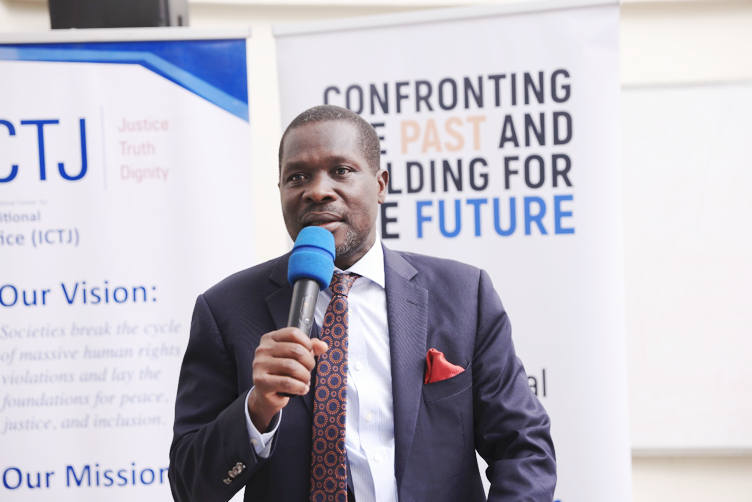
He said collaboration with external partners provides valuable opportunities to connect students with practitioners and institutions, bridging the gap between classroom learning and professional practice. He also emphasised that transitional justice requires collaboration among academia, government, civil society, the private sector and international partners.
Dr. Engoru reaffirmed the School’s commitment to strengthening existing partnerships and expanding collaboration in teaching, research, student engagement and professional development.
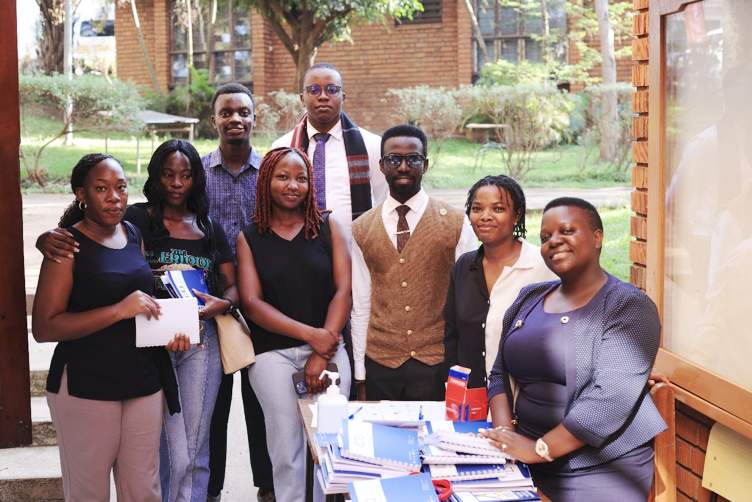
Moving from policy to lived reality
Ms. Marianne Akumu, Head of Office at ICTJ Kampala, called for renewed efforts to move Uganda’s transitional justice agenda from policy and legal frameworks to tangible outcomes for affected communities.
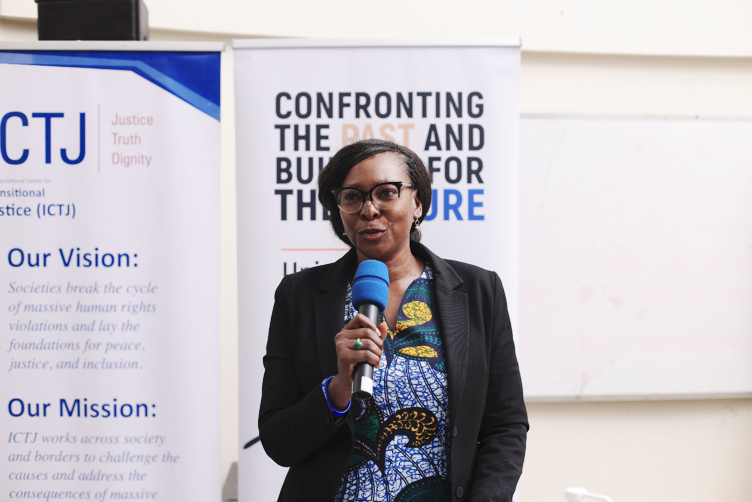
She urged participants to reflect on key questions of truth, accountability and reparations, including who determines the truth, how victims can access meaningful justice, and how processes can reflect communities’ lived experiences.
Ms. Akumu noted that Uganda’s history of conflict, including the conflict between the Government and the Lord’s Resistance Army, has left lasting impacts such as displacement, human rights violations, gender-based violence and disrupted education.
While commending Uganda for being among the first African countries to adopt a national transitional justice policy, she noted that implementation remains slow. She called for practical action to ensure affected communities experience justice in meaningful ways.
She also emphasized meaningful youth participation, noting that young people are eager to help shape Uganda’s future. Ms. Akumu encouraged participants to carry the discussion beyond the symposium and apply transitional justice principles in their studies, professions and communities, while drawing lessons from international experiences such as Colombia.
Calls for stronger collaboration
Speaking at the symposium, Mr. Odde De Jong, First Secretary at the Embassy of the Kingdom of the Netherlands in Kampala, called for stronger collaboration among government, universities, civil society, development partners and survivor communities to advance transitional justice in Uganda.
He said transitional justice must address the harm suffered by victims and survivors while strengthening institutions and relationships needed for a more equitable and peaceful future.
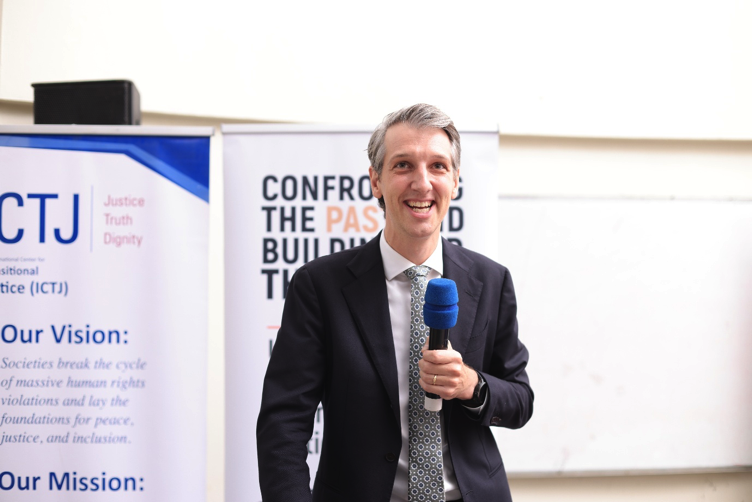
De Jong noted that Uganda’s history of conflict has left lasting impacts, including killings, abductions, sexual violence, child recruitment and displacement. Recalling his first visit to Uganda in 2024, he cited the phrase “the war is not over” to emphasise that the effects of conflict can persist long after violence ends.
He urged Uganda to strengthen efforts in formal and traditional justice, reconciliation, reparations and amnesty, while keeping survivors at the centre. He also called for greater investment in education and partnerships, noting the role of universities in preparing future professionals to advance justice and accountability.
“Confronting the past requires listening to those of different experiences, recognising the realities and ensuring that the future does not reproduce the injustices of the past,” he said.
De Jong challenged young people to continue questioning and innovating around issues such as reparations, accountability and the relationship between traditional and formal justice systems.
“Building a more just and peaceful future is not the responsibility of someone else. It is a responsibility we share,” he said.
A people-centred approach
Delivering the keynote address, Hon. Lyandro Komakech, former MP for Gulu Municipality urged participants to view transitional justice as a pathway from the difficult experiences of Uganda’s past towards a more peaceful and inclusive future.
He called for a comprehensive, people-centred approach that goes beyond legal and technical processes to address the needs of victims, survivors and affected communities through truth-telling, accountability, reparations, reconciliation and memorialisation.
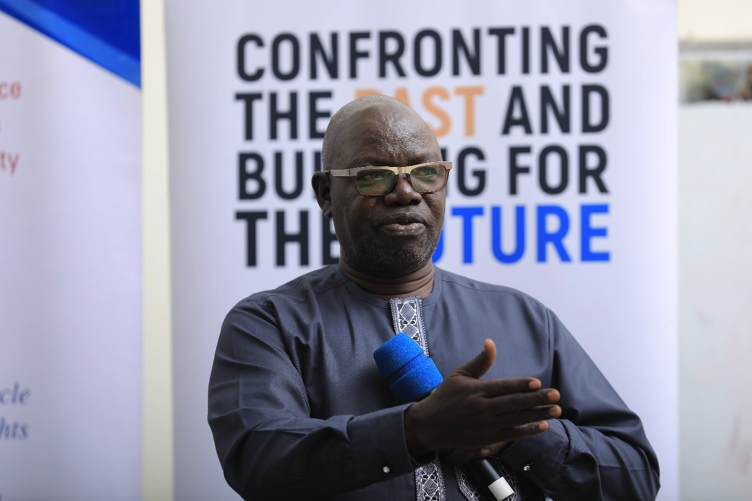
Drawing on his experiences in conflict-affected communities, Hon. Komakech emphasised the importance of Uganda’s traditional and indigenous justice mechanisms and called for stronger collaboration among government, the judiciary, civil society, traditional institutions and communities.
He stressed that unresolved experiences of conflict can continue to affect generations, making it essential to address the past while strengthening institutions and relationships capable of sustaining peace.
Concluding his keynote, Hon. Komakech said remembering and addressing past wrongs should not leave communities trapped in history, but should help create conditions in which present and future generations can live together with greater trust, dignity and security.
From dialogue to action
The symposium concluded with reflections and key takeaways from participants, alongside responses to the Peace Wall and closing remarks from MakSoL and ICTJ.
The discussions underscored the importance of confronting the legacies of conflict while strengthening accountability, inclusion and healing.
By bringing together voices from academia, government, civil society, survivor communities and young people, the symposium sought to strengthen continued dialogue and collective action towards sustainable peace and justice in Uganda.
The event ultimately placed a shared responsibility at the centre of Uganda’s transitional justice journey: confronting the past, addressing continuing harms and ensuring that the lessons of history help build a more peaceful, inclusive and just future.
Some of the proposals raised included:
- Introduction of a remembrance day for Uganda, to appreciate where we are coming from and where the nation is headed.
- Reflect on the issue of conflict in Uganda, it isn’t closed but continues to mutate. Unresolved conflict is used by political actors to further their agendas.
- Create a victim-centred matrix as opposed to an institutional-centred one.
- Decolonisation of systems
- Message to students to build an understanding from real experiences, they were encourages to visit places affect.