School Of Law Orients Fresh Men & Women
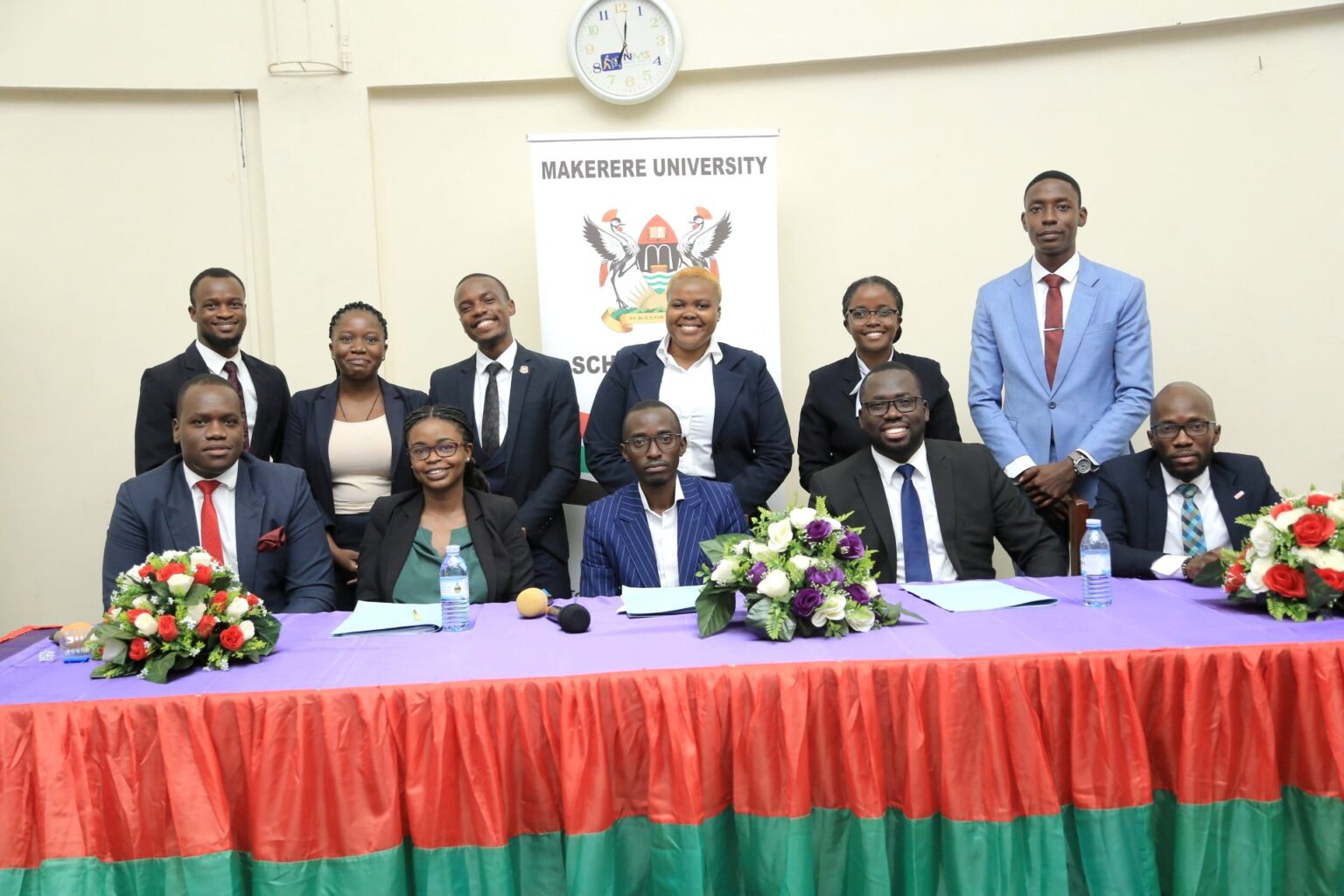
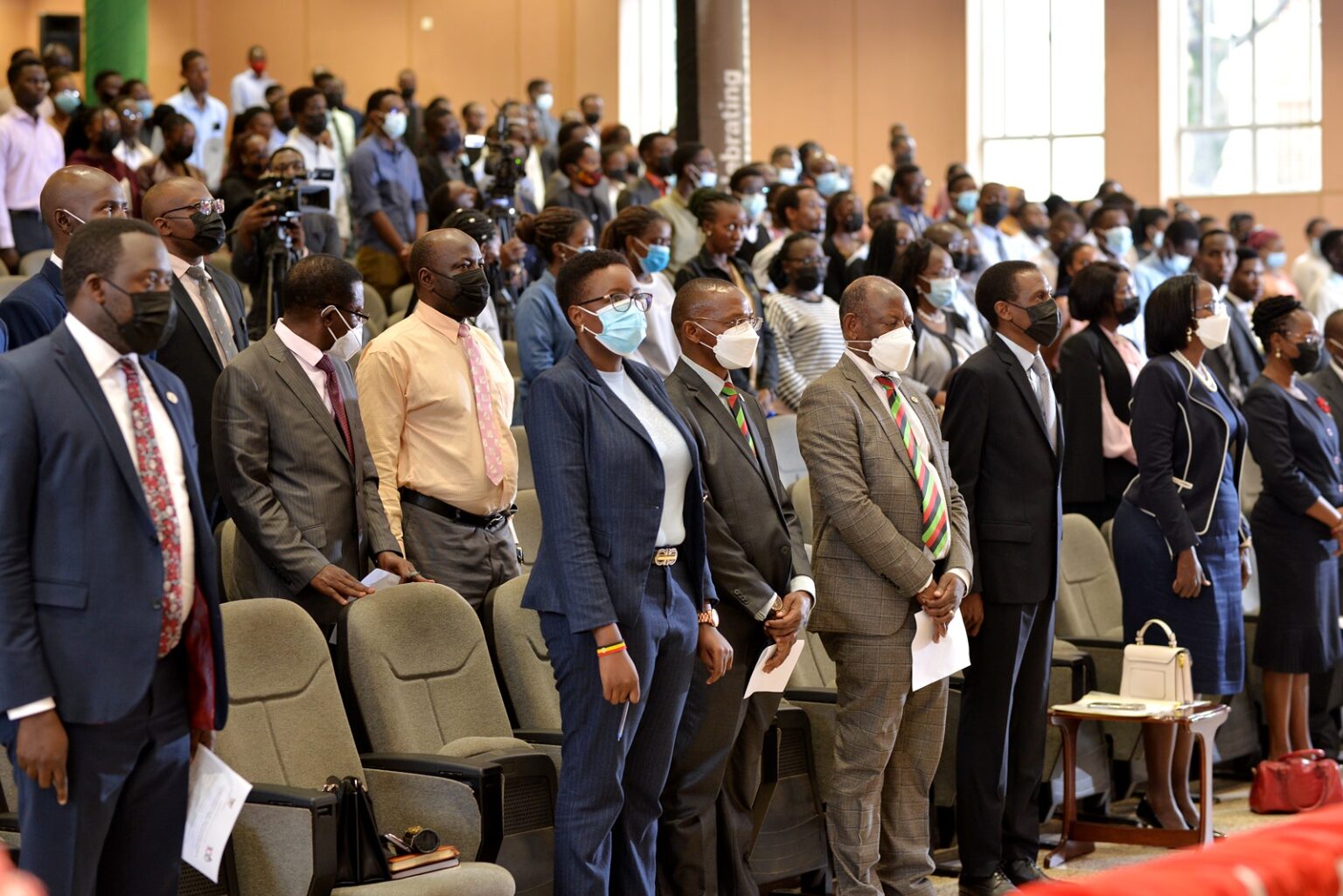
The School of Law organized a freshers’ orientation meeting on Wednesday 2nd February, 2022 to create a sense of belonging among the new students at the School. Established in 1968, initially
The Human Rights and Peace Centre (HURIPEC) hosted a Multi Stakeholder engagement on militarisation, sustainable growth and peace in Uganda. The event was held on Wednesday, 17th November 2021 to discuss
The office of the Academic Registrar has released the results for Bachelor of Laws Pre-Entry Examination 2021-2022 held on Saturday 30th October 2021. Candidates who scored 50% and above passed
The Academic Registrar, Makerere University invites applications for admission to the Re-Advertised Graduate Programmes for the 2021/2022 Academic Year. Applicants should have obtained at least a first degree or its
As we celebrate 100 years of excellent service to humanity, Makerere University is committed to supporting the socio-economic development of Uganda through research and innovations. Apart from producing the first electric car
The President will unveil the Mak@100 logo. On the same occasion, Makerere University will showcase research and innovation outputs arising from student, faculty and stakeholders work and engagement activities. The research and
The Academic Registrar, Makerere University invites applications from Ugandan, East African, South Sudan and international applicants for the undergraduate programmes listed below under the private sponsorship scheme for the 2021/2022
The School of Law, Makerere University in Collaboration with South Square and International Insolvency Institute, is pleased to announce the Moss/Fletcher distinguished lecture on the Cape Town Convention and Implications for Secured Transactions Law Reform in Africa, to be held on Wednesday 10th November 2021 at 2.00pm EAT (11.00am GMT). The 2001 UNIDROIT Convention on International Interests in Mobile Equipment (the Cape Town Convention) and its equipment specific Protocols, is considered one of the most important private commercial law conventions. The protocols cover security interests in aircraft objects, railway rolling stock and space assets. 2019 saw the adoption of the Protocol to the Convention on International Interests in Mobile Equipment on Matters Specific to Mining, Agricultural and Construction Equipment (the MAC Protocol). Implementing the Cape Town Convention framework may directly impact the economies of developing countries.Another consequence flowing from the introduction of the Cape Town Convention framework is to provide for a broader outlook towards secured transactions law reform. The Moss/ Fletcher distinguished lecture was established to honour the memory of two eminent insolvency law scholars: Gabriel Moss QC and Ian Fletcher. BIOS OF PANELLISTSPROF. REGHARD BRITS is an Associate Professor in the Department of Mercantile Law at the University of Pretoria in South Africa. He completed his doctoral thesis, titled "Mortgage foreclosure under the Constitution: Property, housing and the National Credit Act" in 2012 at Stellenbosch University, whereafter he spent three years at the same institution as a postdoctoral fellow. In 2016, he joined the University of Pretoria, where he teaches, amongst others, banking law and insolvency law. His main field of interest is secured transactions and among his numerous publications in this field, he is the author of a monograph on "Real Security Rights" in South Africa, published in 2016. MR. ANTHONY IKEMEFUNA IDIGBE is the Senior Partner with expertise in Insolvency, Business Restructuring, Arbitration, Dispute Resolution, Privatization, Capital Markets, Mergers & Acquisitions, Aviation law and Telecommunications. He is a member of the Board of Trustees of Canadian Association of Nigerian Lawyers (CANL) and a fellow of INSOL International; Chartered Institute of Arbitrators, London; Business Recovery and Insolvency Practitioners Association of Nigeria (BRIPAN) and the International Bar Association (IBA). He is also a member of several national and international bodies including, Association of International Petroleum Negotiators (AIPN); London Court of International Arbitration (LCIA); Lagos Court of Arbitration (LCA); International Chamber of Commerce, Nigeria (ICCN); Institute of Directors (IOD) and International Insolvency Institute (III). MR. KABIITO KARAMAGI, is the Managing Partner of the Ligomarc Advocates. He is the Lead Partner for the firm’s Insolvency and Business Restructuring Practice. He is also an expert in leasing law and has been retained by the World Bank and the International Finance Corporation on numerous occasions to undertake various consultancy assignments on finance leasing in Rwanda and Cameroon.Mar. Karamagi is a Fellow of INSOL International and also holds a Bachelor of Laws Degree (LLB) Hons. from Makerere University, Kampala, and Post Graduate Diploma in Legal Practice (DIP.LP) from Law Development Centre, Kampala. FIDELIS ODITA, QC Fidelis practices at the English and Nigerian Bars in a broad range of areas. In England, he specialises in chancery and commercial work, with emphasis on insolvency and restructuring work. He has acted and/or advised on virtually all major corporate insolvencies in the UK in the last two decades. In Nigeria, his practice encompasses energy, projects, corporate and general commercial law. He has advised and acted for the Federal Government of Nigeria in a number of the most significant energy and power matters, and for many large and medium sized companies. He has extensive commercial arbitration practice as counsel and also sits frequently as an arbitrator in a broad range of commercial disputes. For further information please contact Harriet MusinguziSchool of LawMAKERERE UNIVERSITY, UGANDApr.law@mak.ac.ug
The 8th National Economic Social and Cultural Rights Conference was successfully conducted with a call on the duty bearers to support the realization of social economic rights which had been affected